Why it belongs on the list
Field highlights
- Almost zero light pollution - step just outside town and the Milky Way casts a shadow
- Spot the Southern Cross, the Pointers, and both Magellanic Clouds (galaxies visible to the naked eye)
- Free and needs no gear - though a tour or an app makes it richer
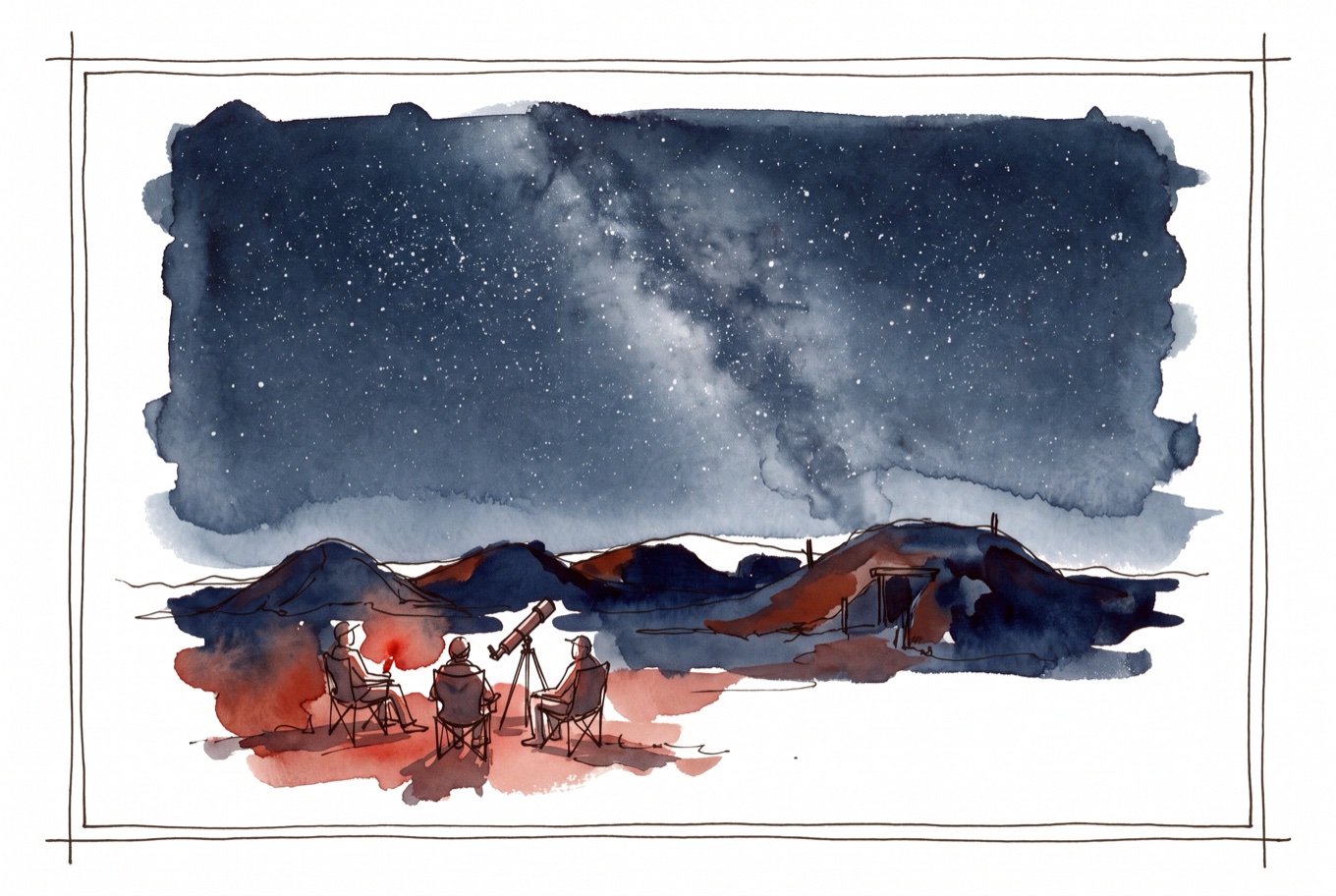
Coober Pedy sits hundreds of kilometres from any city, in the dry, cloud-free heart of the outback - which makes it one of the best places in Australia to look up. The town itself throws off very little light, and a short drive out (or even a walk past the last streetlight) gives you a sky so dark the Milky Way is bright enough to cast a faint shadow.
What you can see
On a clear, moonless night you can pick out:
- The Milky Way - its bright galactic core arcs overhead through the colder months (roughly May–September) and is the headline act.
- The Southern Cross (Crux) and the two Pointers (Alpha and Beta Centauri) - the classic southern-sky signpost.
- The Large and Small Magellanic Clouds - two companion galaxies of our own, visible to the naked eye as faint smudges (you simply can’t see these from the city).
- The “Emu in the Sky” - the dark dust lanes of the Milky Way that form an emu shape, a feature read by Aboriginal sky-watchers for tens of thousands of years.
- Bright planets, the occasional satellite or Starlink train, and any meteor shower that happens to be on.
Tips for the best night
- Time it with the moon. A new moon (or before moonrise / after moonset) gives the darkest sky. The Time and Date page lists moonrise and what’s up tonight for Coober Pedy.
- Get away from lights. The Breakaways and Moon Plain are spectacular, but even pulling over just outside town works. Take a torch (red light preserves your night vision), a chair and warm layers - desert nights get cold fast.
- Give your eyes 20 minutes to adjust, and keep phone screens dim.
- Mind the shafts. If you head out of town in the dark, stick to cleared areas and stay well clear of unfenced mine shafts.
Apps & resources
- Stellarium (free desktop + mobile) or Stellarium Web - point your phone at the sky to identify stars and planets in real time. Star Walk 2, SkySafari and Sky Guide do the same.
- Time and Date (above) for tonight’s planets, the Moon and the ISS.
- A light-pollution map such as
lightpollutionmap.infoshows just how dark this corner of South Australia is compared to home.
Prefer a guide? Radeka Downunder runs a stargazing presentation that takes you a short way out of town to talk through the southern stars and the stories - Greek, Roman and Aboriginal - behind them.
Details last checked 2026-07-01. Something changed? Suggest an edit.