Stories from the opal fields
What Does 'Coober Pedy' Mean? The Contested Name
The name is usually traced to the Aboriginal 'kupa piti' - but what it actually means, and even which language it's from, is far from settled.
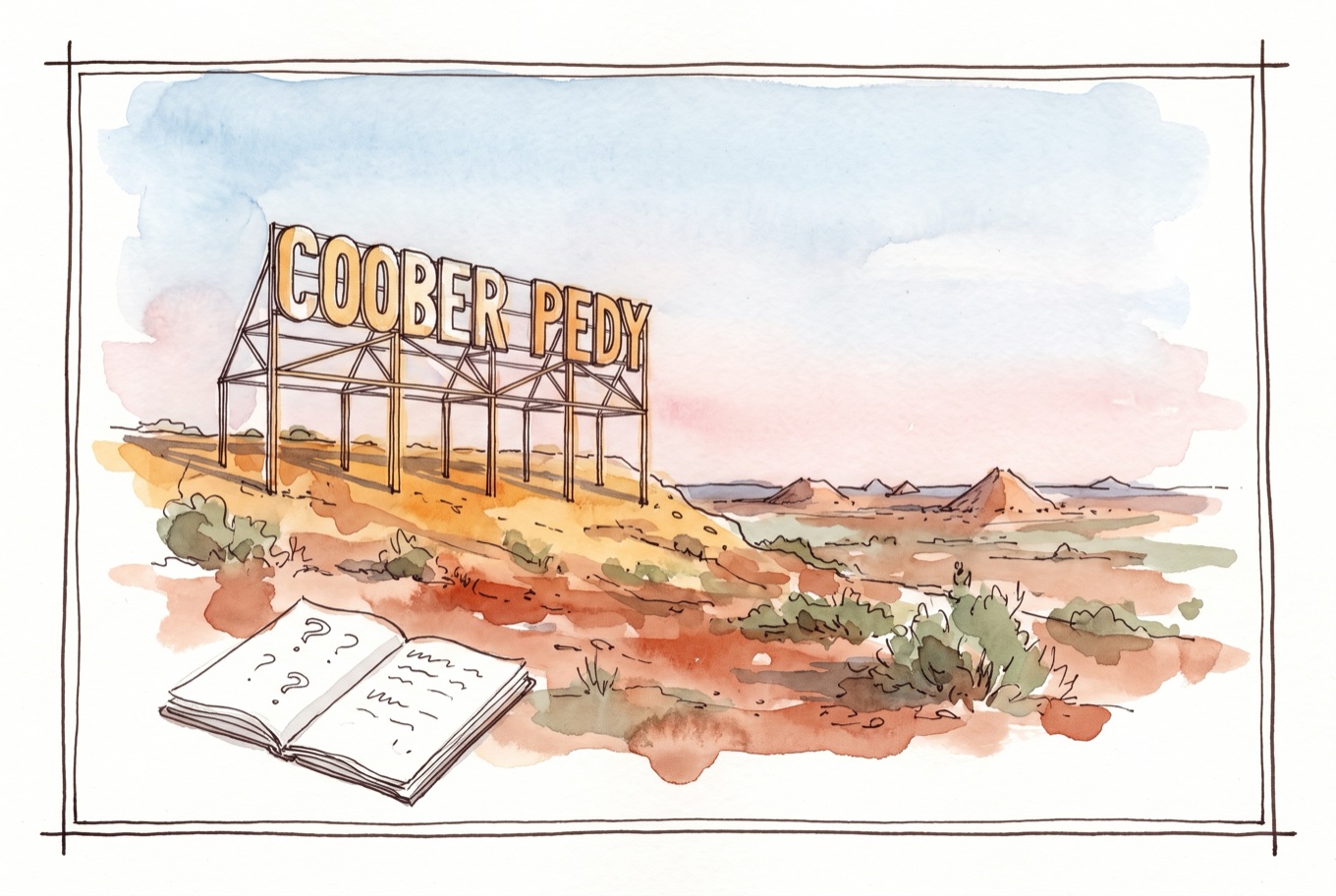
Almost every visitor is told that “Coober Pedy” comes from the Aboriginal kupa piti, meaning “white man’s hole in the ground.” It’s a great line - but the truth is more tangled, and worth telling honestly.
A name that’s hard to pin down
The town was renamed Coober Pedy in 1920 (it had been “the Stuart Range opal field”). The name is generally said to derive from words rendered as kupa piti (and sometimes guba bidi), and the popular translation is “white man’s / whitefella’s hole.” But the details are genuinely contested:
- Even the source language isn’t certain - it’s variously attributed to Kokatha, Barngarla and Parnkalla (Pirlatapa) words.
- “kupa” is glossed by different sources as “white man” or “uninitiated boy.”
- “piti” is usually “hole,” but some linguists suggest it was effectively a word adapted or coined for “quarry” - that is, to describe the white men’s digging, rather than an older place name.
In other words, the name may describe what European miners were doing here, framed in Aboriginal language, rather than recording a pre-existing Aboriginal name for the site.
Was this a place before the miners?
It’s worth being careful with the romantic version of the story. Coober Pedy sits in harsh, effectively waterless gibber desert - there’s no permanent water here, which is exactly why the town’s supply has always had to be carted, bored or desalinated. That makes it unlikely that this precise spot was a settled or frequently-used Aboriginal place before European prospectors arrived in 1915; the surrounding Country has deep significance to Aboriginal people, but the “hole in the ground” almost certainly refers to mining, which began with the opal rush.
“Umoona”
There’s a parallel name worth knowing: in 1975 the local Aboriginal community adopted Umoona - meaning “long life,” and also their word for the mulga tree - and you’ll see it on the Umoona Opal Mine & Museum and around town.
So when someone tells you exactly what “Coober Pedy” means, it’s fair to smile and say: it depends who you ask. That uncertainty is part of the town’s story, not a flaw in it.
A living topic. Meanings and language attributions here are debated by linguists and local people alike. If you have better-sourced detail, tell us - we’d like to get this right.