Stories from the opal fields
A Town of Many Nations
How a tiny, brutally hot speck of desert came to be one of the most multicultural towns in Australia - drawn together, and divided, by opal.
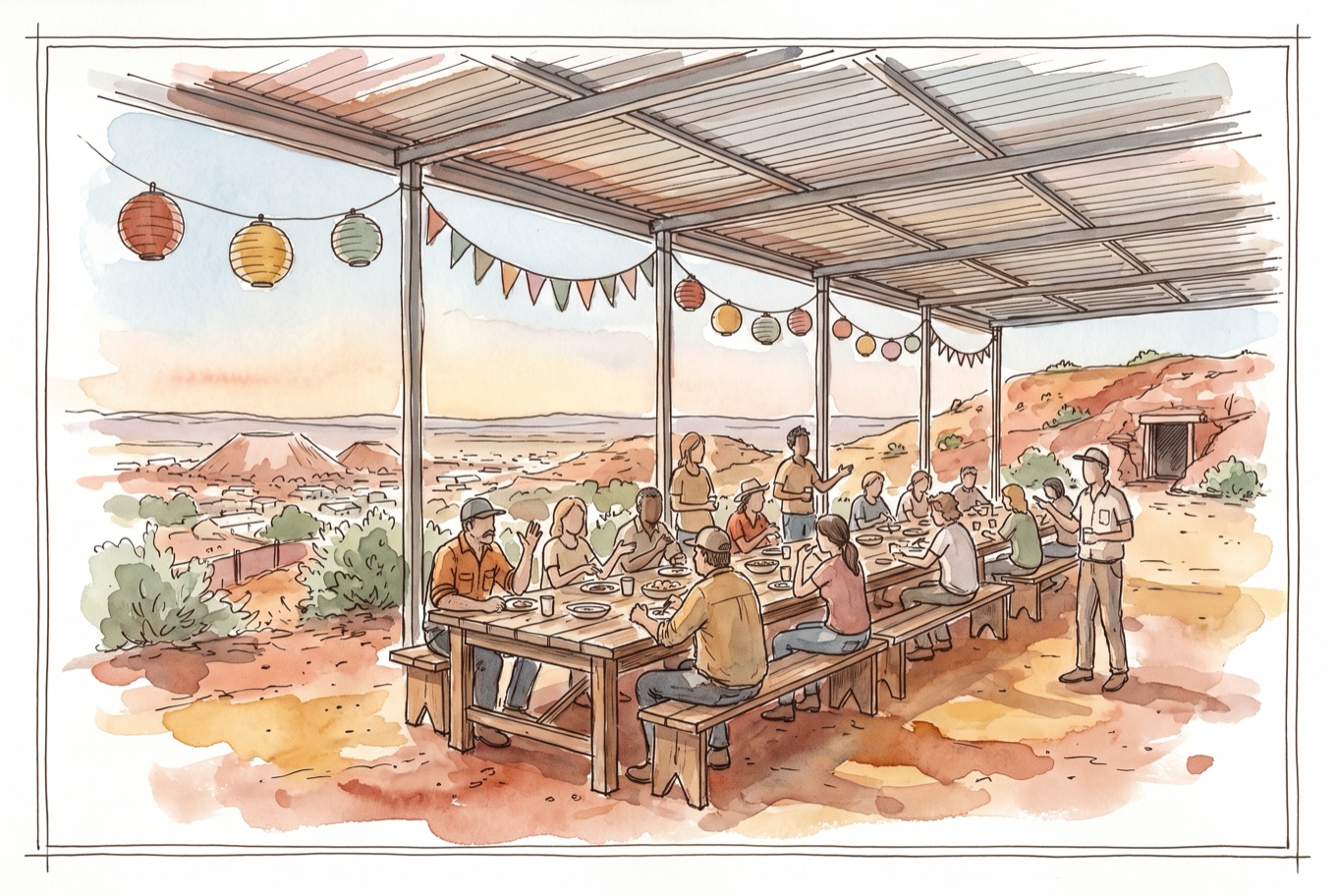
Stand outside the supermarket in Coober Pedy and listen, and you’ll hear a remarkable thing for a town of around 2,000 people in the middle of nowhere: a dozen languages. Coober Pedy is, per head, one of the most multicultural communities in Australia - and opal is the reason.
Opal as the great leveller
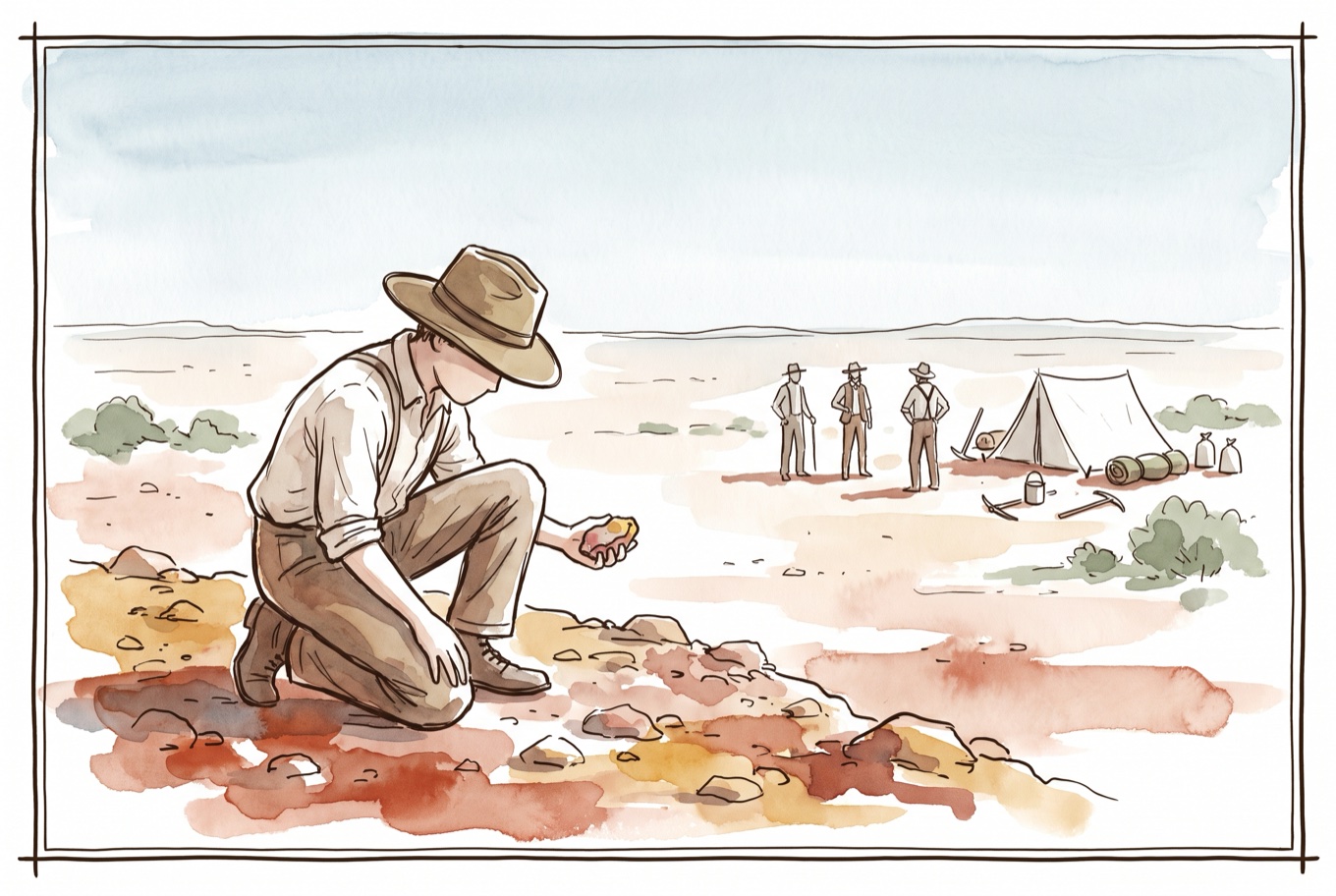
The opal fields didn’t care where you were from. From the early-1900s rush and especially in the post-war decades, waves of migrants arrived to chase a fortune that anyone with a pick and some grit could find - no capital, no boss, no English required. Italians, Greeks, Croatians, Serbians, and people from many other backgrounds dug side by side. Today the town’s roughly 2,000 residents come from around 35 different nationalities - and in the busier boom years, with a much bigger population, that count was higher still (you’ll hear figures up towards fifty).
You can still see it - and taste it
The town’s diversity is written into its clubs and churches, many of them carved underground:
- The Italian Club, a miners’ club since 1964.
- The Croatian Welfare & Sports Club.
- The Greek community’s famous Friday-night BBQ.
- The underground Serbian Orthodox Church, the Catacomb (Anglican) Church and St Peter & Paul’s Catholic Church.
Visitors are welcome at the clubs - it’s one of the warmest ways to meet locals. Browse them all in the Multicultural Coober Pedy collection.
A changing town
Coober Pedy’s population has ebbed with the price of opal: bigger in the boom years, quieter now as fewer people mine full-time. But the legacy of all those nations is baked into the place - in the food, the festivals, the cemeteries and the faces of the people who stayed.
Help us get the numbers right. Population and “number of nationalities” figures vary by source and era. If you have better local data, let us know.